The Women Who Bear the Burden of Fashion’s Overproduction Problem
Words by Nana Akua A Mensah, with photography by Faiza Salman and Tonia-Marie Parker.
Kantamanto is more than a market. It is its own ecosystem, sustained by tens of thousands of people who sort, mend, and reimagine excess clothing discarded by the original consumers. But today, even this most innovative of systems is being pushed to its breaking point.
Watch the short film
Director: Tonia-Marie Parker Co-Director: Faiza Salman Director of Photography: Julius Tornyi Production: The Or Foundation Editor and Sound Designer: Nunana Linda Amemordzi Production Coordinator: Henry Wright Annan Voice Over: Nana Adoma Asare Adei, Stella Oppong Agyare, Fideis Issah
Rows of single-use t-shirts from marathons, conferences, and family reunions hang displayed on the stalls of secondhand clothing vendors that line one of the entrances to the world’s largest secondhand market, Kantamanto.
The image of these often context-specific objects, striking not only for their abundance but also for their absurdity in a new place where the messages they carry are unfamiliar, offers a prescient preview of the market.
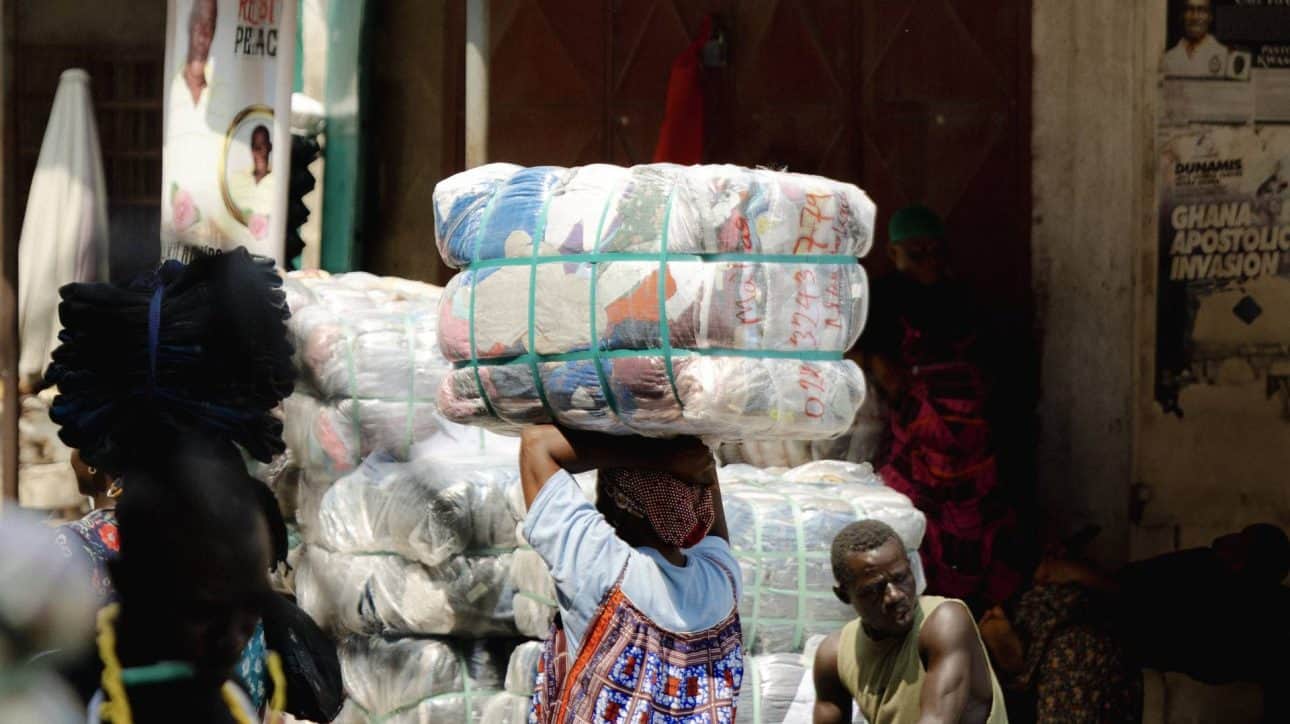
Located in the heart of the business district of Accra, Ghana, Kantamanto is spilling over with fabric and materials, color, and activity. The Accra Metropolitan Assembly estimates that about 30,000 people earn their livelihoods in the market, working as traders, menders, upcyclers, leatherworkers, food vendors, and porters. Each person contributes to a remarkable infrastructure that has been organically built, adapted, and refined since the 1950s, when the secondhand clothing trade first took hold in Ghana. Together, they have created an ecosystem of care and ingenuity; they sort, repair, and bring new life to the excess clothing that is cast off from the Global North.
And yet, even with all this labor, the system is overwhelmed. Everywhere you look, there is fabric: towering piles on the side of the street, draped over the arms of traders on the move looking for customers, and bursting from bags in vendors’ stalls. The sheer volume of clothing arrives faster than Kantamanto’s workers can absorb it. What emerges is an integral community, led largely by women, who have innovated one of the most authentic circular economies in the world, persisting in the face of the unyielding excess of fashion’s waste.
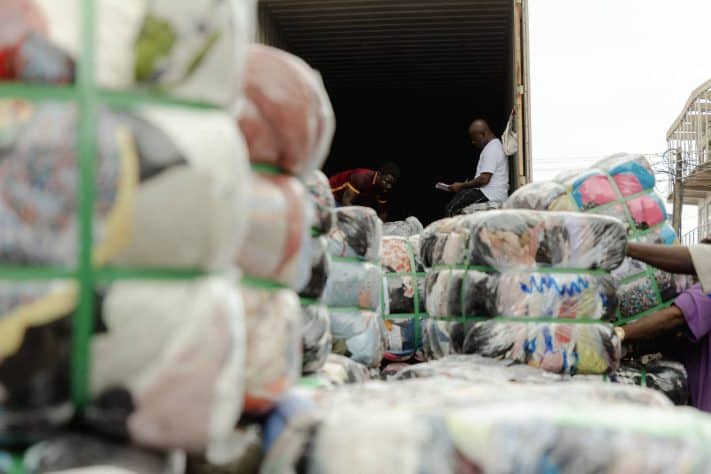
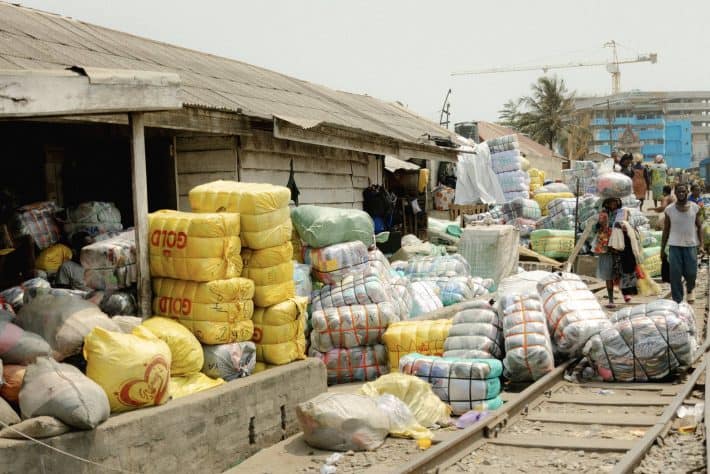
An estimated 15 million garments passed through the Kantamanto market every week before the tragic fire that destroyed 60% of the market in January 2025, slowing down business. With the meteoric rise of fast fashion, the global fashion and apparel industry produces an ever-increasing number of new garments each year. The approach to fashion consumption has shifted dramatically over the last two decades: where clothing was once intended to be re-worn, cared for, and mended, it is now thought of as inherently disposable, made to be worn a few times—or sometimes never—and quickly replaced.
For many in the Global North, clothing donations are marketed as a socially positive act, extending the life of an item while unintentionally taking on the responsibility for where it ends up.
But for clothing donations to have a net positive impact, there would need to be a clothing deficit—people or causes who need these items that are being donated. And yet, places like Kantamanto, where the clothing ends up, tell us a much more complex story.
“It is not like it used to be,” says Maame Rosina, a veteran retailer who has worked in Kantamanto for nearly 30 years. “When we opened the bales back then, the items were good quality. We could sell out of our stock completely. But now, out of every 100 items, 60 or 70 are unusable. It’s a waste problem, and frankly, it’s a waste of money that we can’t afford to lose.”
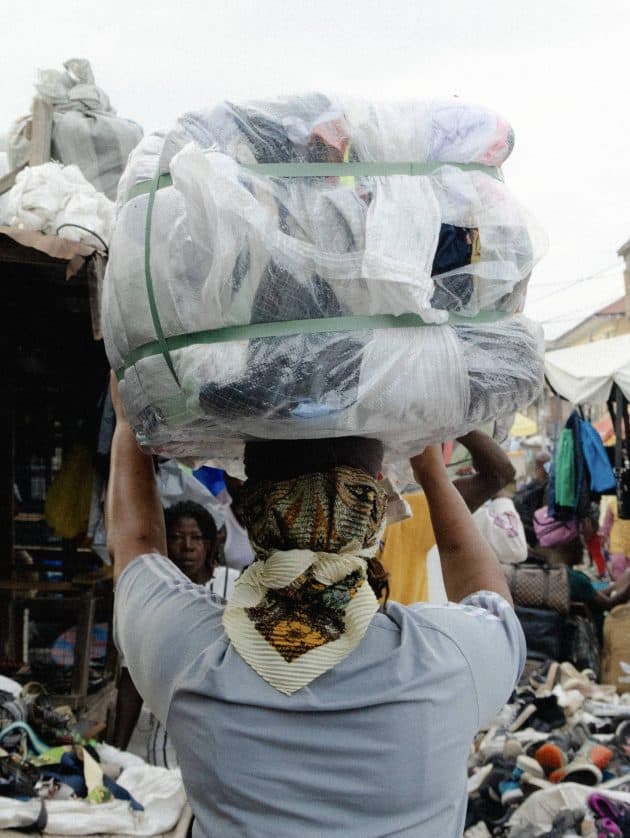
Ghana is one of the largest importers of secondhand clothing in the world, importing over 147,000 metric tons of secondhand clothing in 2023 according to UN Comtrade. These shipments of clothing are the raw materials for the bustling trade. Importers mark up the price of secondhand clothing bales shipped in from major exporting countries like the UK, the EU, and China, selling them to retailers like Rosina for an average of $200, with some bales such as children’s clothing sold for over $700 per bale. Retailers purchase the bales without first seeing the contents and they cannot contact the exporter or return a bad bale.
For decades, this gamble paid off. Enough of the garments inside the average bale were high-quality, durable, and easily resold. Such sales funded the repair or upcycling of the lower-quality items that would arrive in every bale. But today, the risk far outpaces the reward. Over half of the items in each bale are worth less than the cost to process them—including transport, storage, and sanitation. This shift is driving retailers into debt and threatening a collapse of one of the largest reuse and upcycling economies in the world.
Rosina reports that many women in Kantamanto take out loans to buy these bales. When the clothes inside are unsellable, they are left with debt, stress, and piles of waste clothing. “We pass the things we can’t sell to the younger men in the smaller stalls outside the market,” she explains. “But because the items are in such bad condition, they often can’t sell them either. So the clothes end up on the side of the road or in dumpsites.” At a time when the fashion industry generally supports the ambition to transition to a circular economy, the precarity of the global secondhand clothing trade in Kantamanto Market raises an alarm.
The Or Foundation supported women like Rosina to form the Kantamanto Women’s Association to give them a united voice. With membership from across the entire ecosystem of the market—resellers, tailors, upcyclers, food vendors, and porters—the association responds to a reality where women are the backbone of the secondhand trade, but lack access to retirement, welfare, or other protections. “When we first called a meeting to form the Association, we expected about a hundred people to attend,” Rosina recalls. “But the space was overwhelmed with women. You could see that we really needed this.”
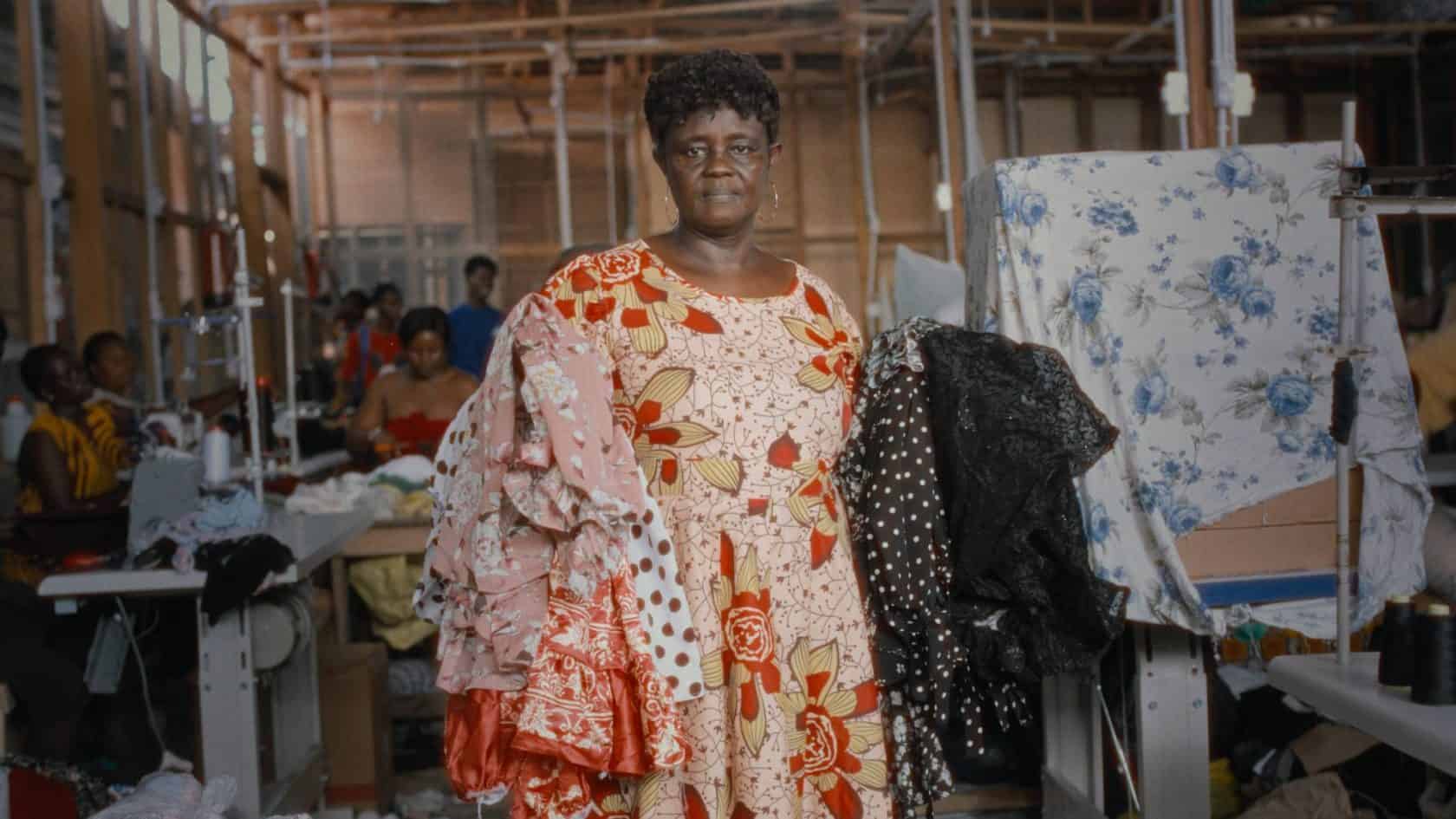
For some, like Ruth Otoo, who has worked as an upcycler for 15 years, survival in Kantamanto means transforming secondhand clothing entirely. “When items in the bales are not good enough to sell, we find ways to reimagine them,” she says. “We turn them into kids’ clothes, napkins, or sheets to save them from going to waste.”
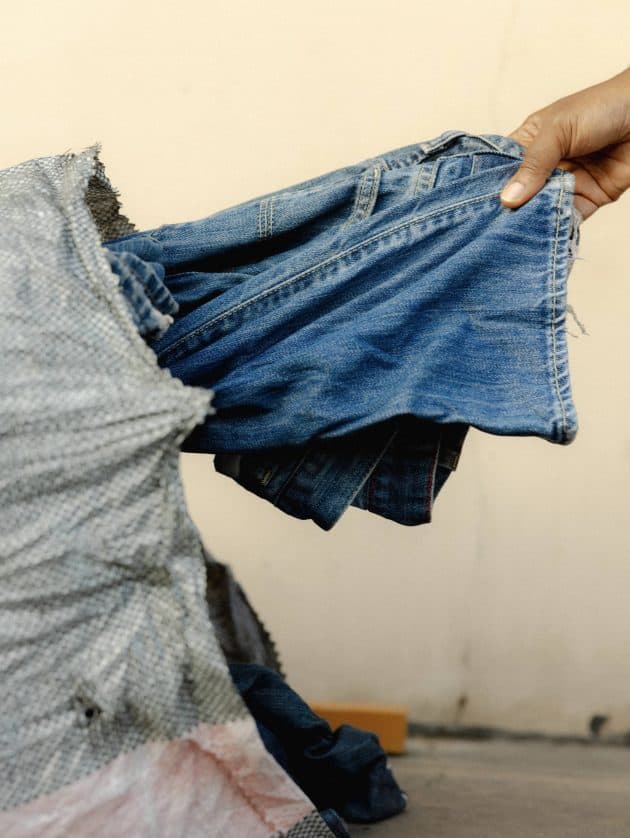
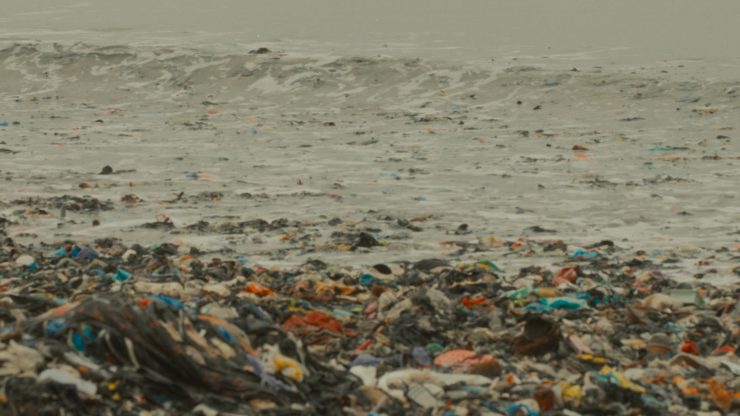
But even this ingenuity is being eroded. “The contents of the bales are so bad now that even what we can upcycle has reduced,” Ruth says. “And when the third-level resellers take these items, they try to upcycle them, but usually are unable to produce pieces that anyone wants to buy. So the clothes are dumped on the roadside, making their way into gutters or waterways. We were never affected by floods in Kantamanto before. But now, we are. And our beaches are so polluted that we can’t even enjoy a day there anymore. When you’re in the water, you’re surrounded by waste clothing.”
That waste is now showing up on Accra’s coastline, where The Or Foundation runs Accra’s largest beach cleanup program.
Every Tuesday, a team of 60 people, called the Tide Turners, alongside volunteers, gathers at Jamestown Beach in Accra to clear the shores of what waste they can.
“We go to the beach every Tuesday, and we remove about 20 tons of waste clothing every week,” says Fideis Issah, one of the women employed by Tide Turners. “We deserve to have clean beaches as a place to relax and spend time with our friends. But with the state of the water now, no one wants to spend time there.”
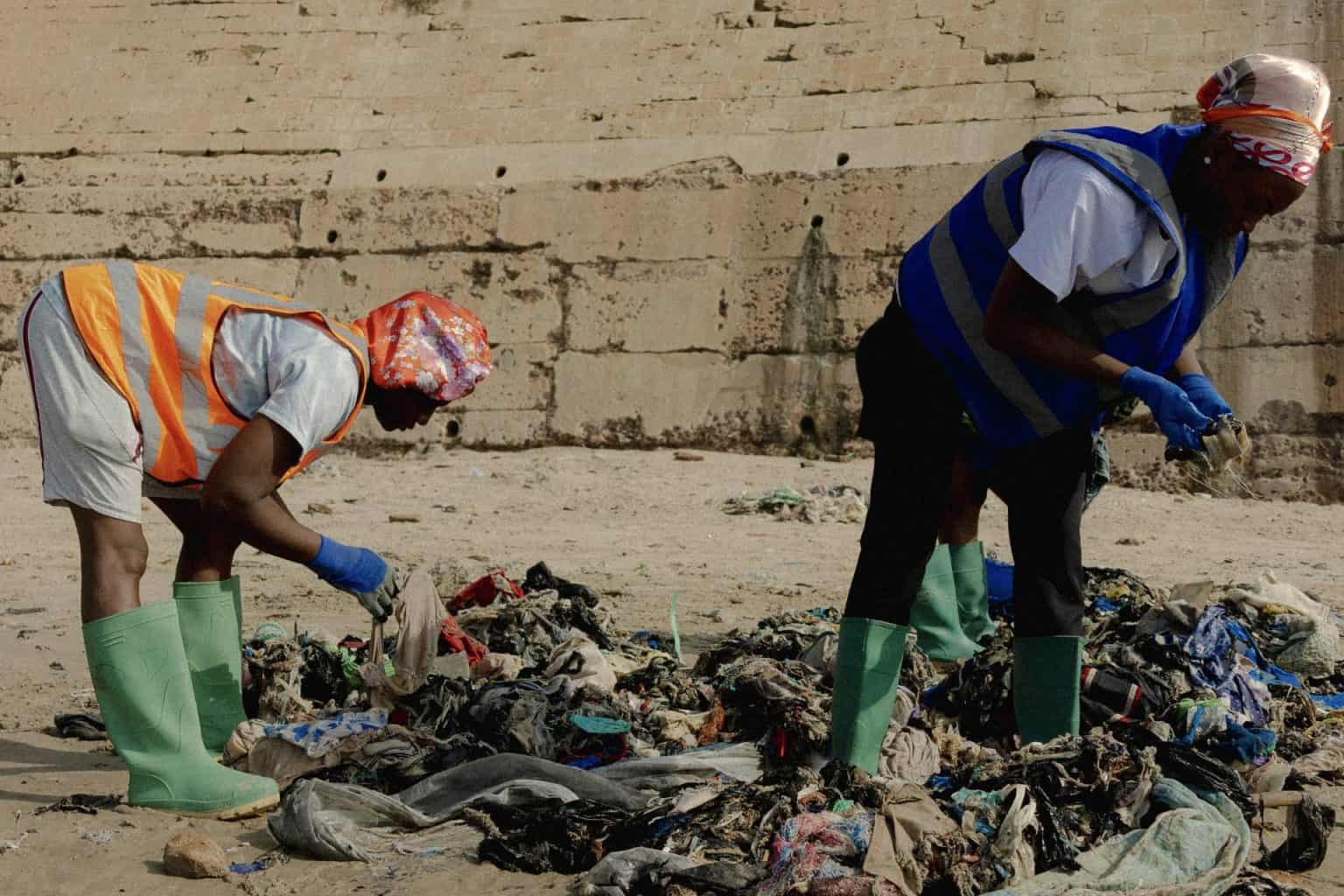
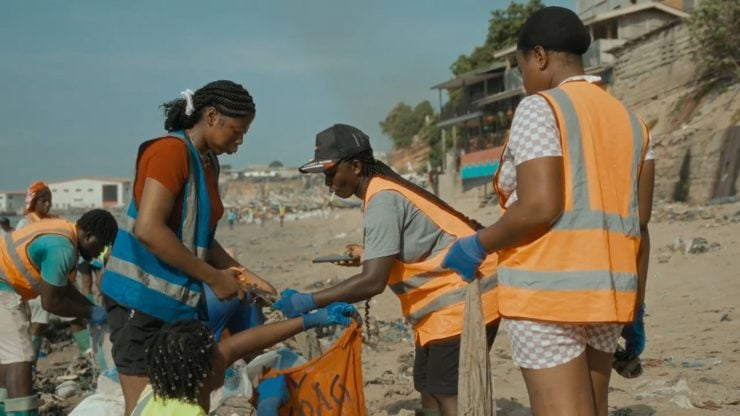
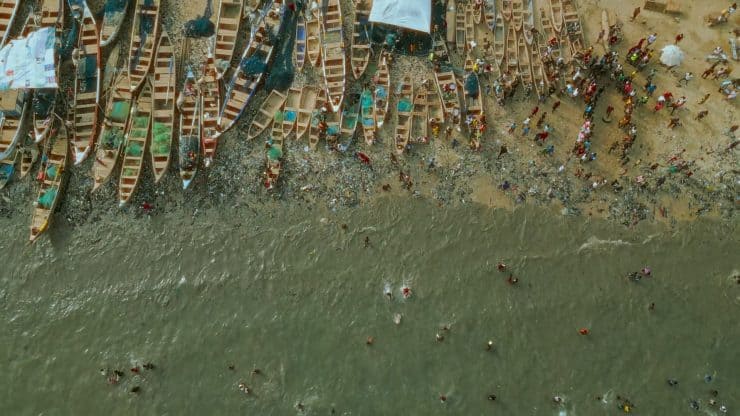
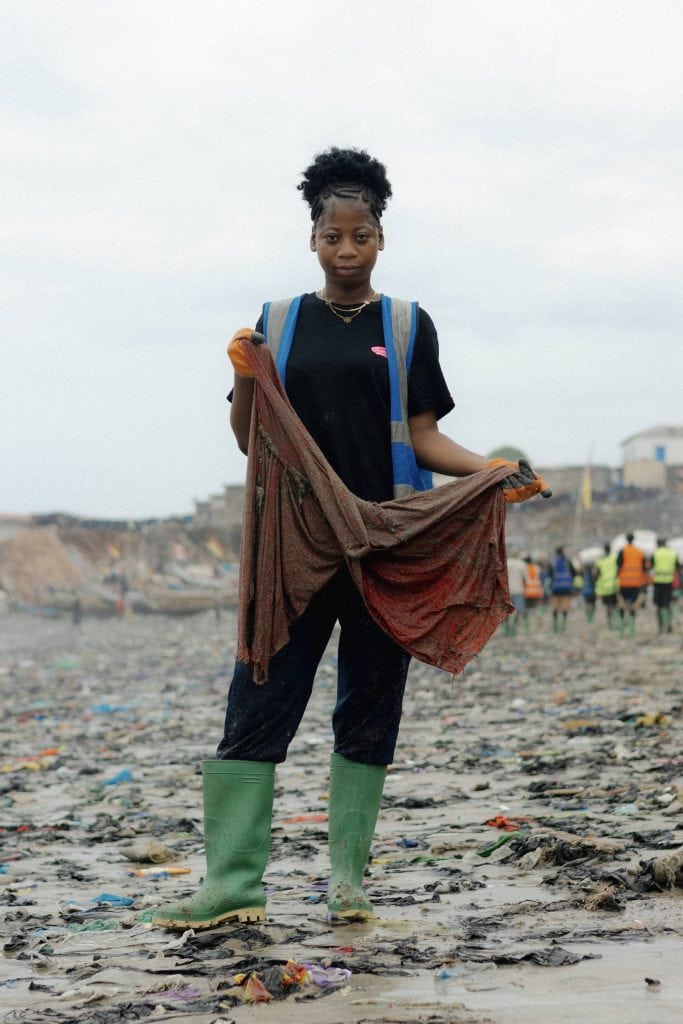
Fideis Issah is part of a team that cuts the tags off the clothes collected from the beaches, an initiative designed to track and hold brands accountable for the waste they generate. She says she recognizes many of the labels: big-name brands from the Global North that wash to the surface in Accra’s waters.
Through their interactions with organizations like The Or Foundation, many women in the market are piecing together a clearer picture of where their labor sits in the global fashion system. “I have learned that only a fraction of clothing produced is resold in the Global North, with most ending up in markets like Kantamanto,” Rosina says. “So women like us are doing more work for the fashion industry than we are recognized for.”
And it is a Herculean task that these women shoulder. Over decades, they have built an economy of reuse, upcycling, mending, and remanufacturing—a true exemplar of circularity that the fashion industry could learn from. But they cannot continue to carry the weight of a broken system, however innovative their efforts.
The burden of excessive textile and clothing waste cannot rest solely with the women of Kantamanto. For the industry to move toward a fairer future, brands and producers must play their part in addressing the system’s imbalances by taking the responsibility for the end of life of their products—what happens to them once they have left the store. As Rosina puts it plainly: “These brands owe us. We work for them.”
Related Posts